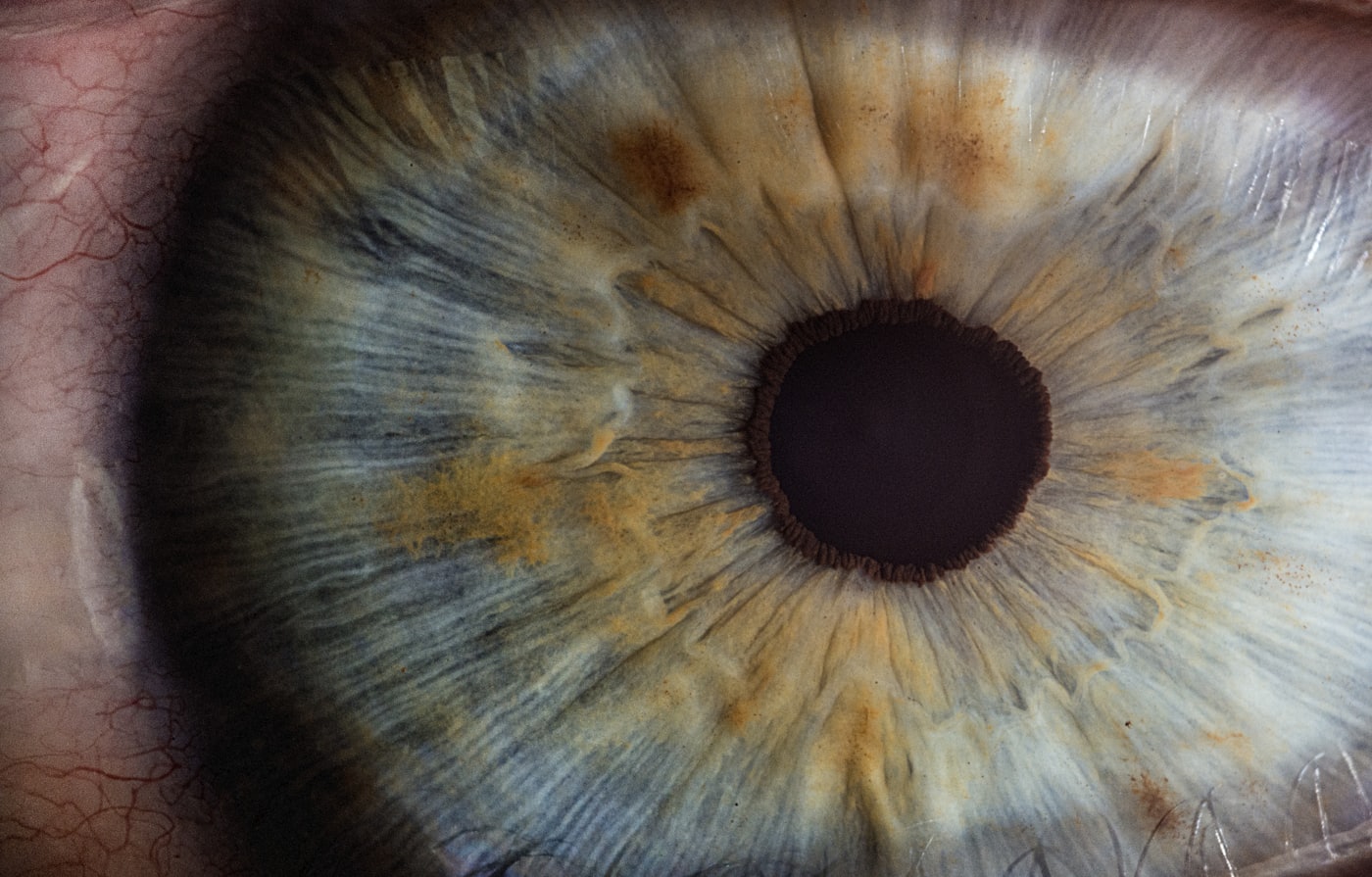
People often ask what an iridologist is actually seeing. The honest answer is that we are not seeing a diagnosis. We are seeing structure — the density, tone, and arrangement of the fibers that make up the iris — and considering what those qualities may suggest about a person's constitution.
The iris is remarkably detailed. Under magnification, what looks like a flat ring of color resolves into a woven texture with variation across every region. That texture is largely stable across a lifetime, which is part of what makes it interesting to observe.
A Record of Tendency, Not a Readout
It helps to think of the iris as describing terrain rather than weather. Terrain speaks to what is generally true of your constitution — where your system may be more robust and where it may need more deliberate support. Weather is what you are experiencing this month, and the iris is not the right instrument for that.
This distinction matters, because it sets honest expectations. An iris analysis will not tell you what changed last week. It may help explain why your body tends to respond the way it does.
Markers Commonly Observed
Practitioners consider several qualities together. Any one of them in isolation says very little.
Fiber Density
How tightly the fibers are woven, traditionally associated with constitutional resilience.
Zone Tone
Variation in shade across regions of the iris, often considered alongside areas carrying more load.
Concentric Rings
Ring patterns traditionally linked to tension held in the nervous system.
Outer Rim
The margin of the iris, associated in tradition with circulation and elimination.
Pupil Response
Size and reactivity, considered alongside overall nervous system load.
These are observations, not measurements. Two practitioners may describe the same iris in slightly different language, which is precisely why the analysis is only ever one input.
Constitution and Current State
Much of what shows in the iris relates to inherited tendency — the baseline your body works from. That baseline is not a sentence. Knowing that your system tends toward a particular pattern simply tells you which foundations deserve more attention.
Two people with similar constitutions can live very differently depending on hydration, mineral status, sleep, stress load, and elimination. The tendency is the starting point. What you build on it is the part you control.
What You Can Notice Yourself
You do not need equipment to begin paying closer attention to how your body communicates. These are the everyday signals worth tracking.
Tracking these for a few weeks before an analysis makes the conversation far more useful. Patterns you have observed yourself carry more weight than anything the iris alone can suggest.
Where People Go Wrong
The most common mistake is treating a marking as a verdict. Someone reads that a particular formation corresponds to an organ and concludes something is wrong with that organ. That is not how this works, and it causes real anxiety.
Iris analysis does not detect, confirm, or rule out disease. If you have a symptom that concerns you, that belongs with a licensed medical provider, and no observation of your eye should ever delay that.
Bringing It Back to the Whole Picture
The value of this work is not in any single marker. It is in placing the observations beside your history, your daily patterns, and your symptoms, and noticing where the same theme keeps appearing.
When several independent threads point in the same direction, you have something worth acting on. That is the standard I hold this to.
Conclusion
Your eyes offer one lens among several. Used carefully, and with clear limits, that lens can help you understand your body's tendencies and decide which foundations to support first.
Everything meaningful still comes from listening to the whole picture — and from paying attention over time.